Showing posts with label Anthony Antonellis. Show all posts

Thursday, April 09, 2015

Images from Hands Off!


Here's documentation from the show which has now closed. List of works below.




Harry Burden
Body Part Search Result, 2015
Boxes and Objects bought from internet
Approx. 170 x 150cm

Aleksandra Domanović
Shanghai prototype, 2014
Laser sintered PA plastic, polyurethane, Soft-Touch & brass & flocked finish
Courtesy the artist and Tanya Leighton Gallery, Berlin

Benedict Drew
No Body, 2014
C-Type print on Kodak Metallic paper mounted on 2mm aluminium paper with battens
Edition of 50 (plus 5 artist's proofs)
240mm x 184mm


Courtesy of Matt’s Gallery, London
Nina Beier and Simon Dybbroe Møller
The Industrial Revolution, 2013
Replicas of the Rodin sculptures, The Hand of God, The Secret, Two Hands, Hand of Pianist, The Cathedral Bronze, plaster, resin, acrylic paint
Dimensions variable
Courtesy Laura Bartlett Gallery, London

Anonymous
Untitled
Reproduction painting on vintage found manuscript paper
22cm x 17cm

Celia Hempton
Caspar, 2014
Risograph
Edition of 80 + 20 AP
297 x 420 mm
Courtesy Studio Voltaire and Lorcan O'Neill Gallery.

Harry Burden
The Relatives, 2015
Digital print on 300gsm archival paper in artists frame 
297 x 420mm 
Ed. 5 (with 30 free prints on lower paper stock)

Neil Rumming
Pink Nose, 2013
Acrylic, silkscren, relief ink on canvas
50 x 40cm

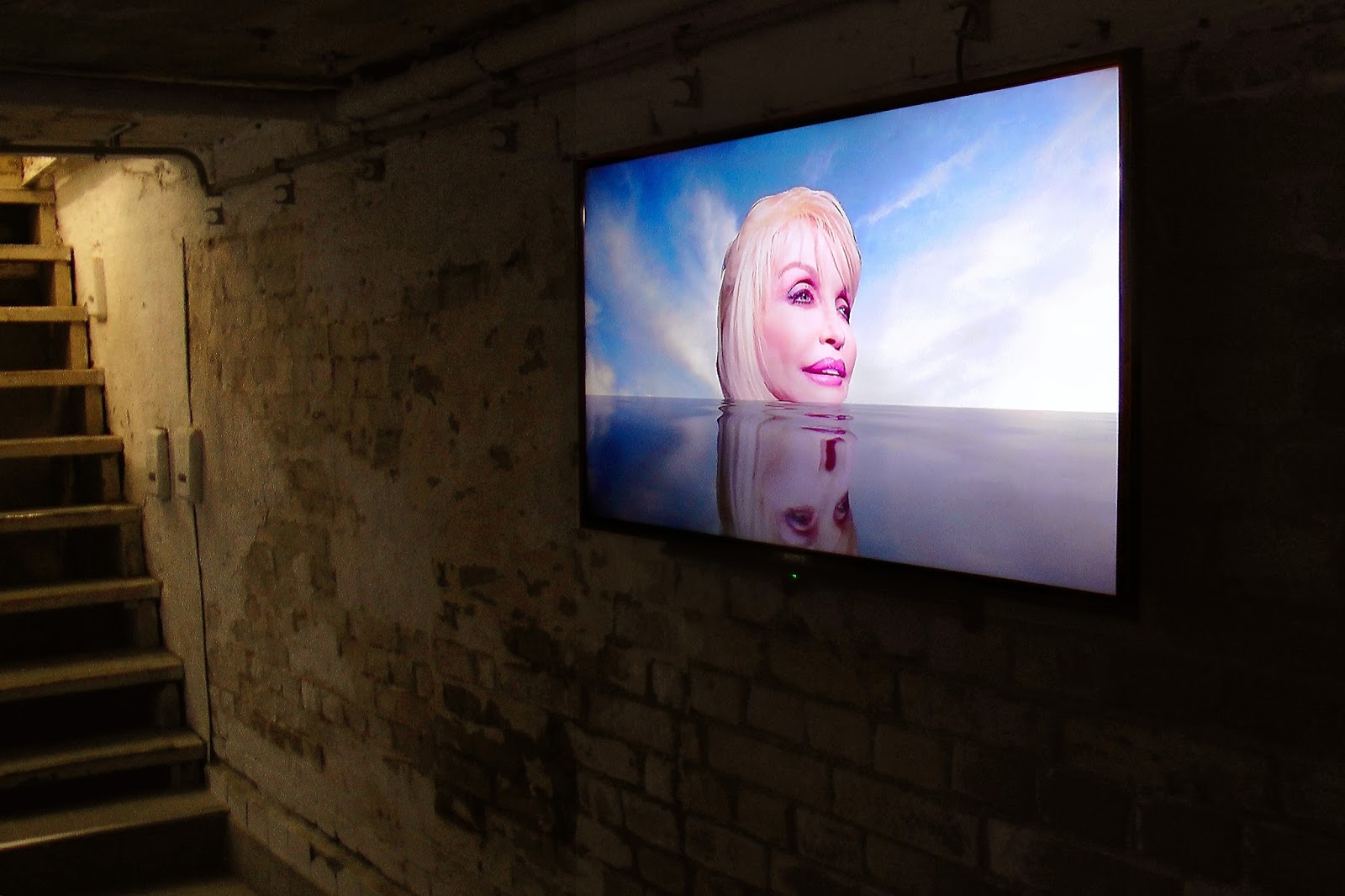
Anthony Antonellis
dollhead.gif, 2012

Bhakti Baxter
HEADS (Planck)
2012
Ink on vinyl, light bulb, fan
3 x 4 x 5ft
courtesy of Gallery Diet and the artist


Friday, March 16, 2012

Eyes are Responding


Responsive Eyes is up for 2 months now. You can read a few interviews with me about it on Dazed and New Art Network

I also talk about it in a massive 3000 word feature I've written for It's Nice That Issue 8 on virtual and real art space.


(Images above are still from the gifs from Anthony Antonellis's works CMYRGB)

Monday, March 05, 2012

Count down to Responsive Eyes

Back from NYC and Marrakech marathon and mere days til I open the Responsive Eyes!

Responsive Eyes curated by Francesca Gavin
Jacob’s Island Gallery 56 Butler’s & Colonial Wharf 10–11 Shad Thames London SE1 2PY

15 March — 12 May 2012
Exhibition opening: Wednesday 14 March, 6–8 pm


Anthony Antonellis, Paul B Davis, Thomas Lock, Sara Ludy, Mike Ruiz, Lucy Stokton, Mark Titchner, Artie Vierkant

The Responsive Eye was an exhibition held at MoMA in New York in 1965. It brought together artworks by so-called ‘Op’ and minimalist artists such as Bridget Riley, Josef Albers, Viktor Vasarely and Almir Mavignier. The curator William Seitz described the show an ‘exhibition that would indicate an activity, not a kind of art’. In the catalogue text Seitz writes, ‘The eye responds most directly when nonessentials such as freely modulated shape and tone, brush gestures and impasto are absent.’ He argued this was ‘non-objective perceptual art’, art that ‘exists primarily for its impact on reception rather than for conceptual examination... Ideological focus has moved from the outside world, passed through the work as object, and entered the incompletely explored region area between the cornea and the brain.’
This exhibition is best documented in an early Brian De Palma documentary posted on the Internet — our magic modern perception box, our constant optical illusion machine. The aim of the show was to use the way De Palma depicts viewers responding to these artworks — both physically and in commentary — as a way to examine how technology-infused contemporary artworks play with our relationship to the screen.

In De Palma’s 1966 film the psychologist Rudolph Arnheim observes, ‘Vision is based on discrimination. Vision is based on the distinction between things that are different from each other. If you put the human mind in a situation where this distinction is no longer there you get your brain in a situation in which the eye jumps the track. I think this is what gives you this profoundly disturbing effect.’ The comment could easily apply to how we relate and view the constant influx of movement, imagery, sound and informational content in modern screen life. Rather than an exhibition of contemporary optical artworks, the aim is to explore ideas about the process of looking, and our mental and physical relationship with art. Just as the sixties generation was awed by the experience of these ‘retinal’ works, so gifs, digital paintings or videos make us reexamine our feelings about the screen, how we look and what we are looking at.